
Business concept
An audio workbench for guided recordings
Your audio tools and sound library share a name built around the work your creators do.
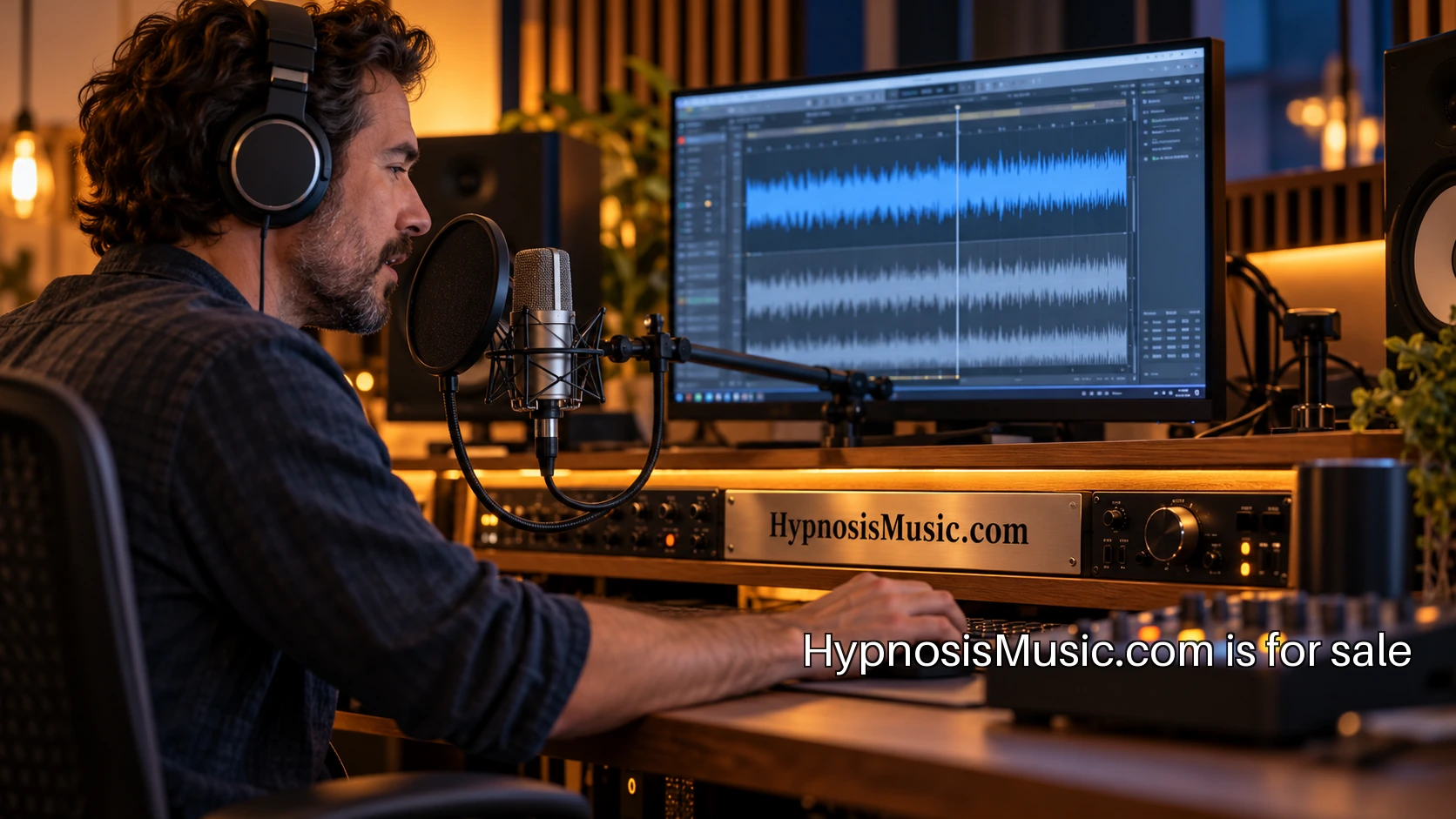
A creator making a guided recording often starts with several separate pieces: a spoken track, selected music, an edit list and a destination for the finished file. HypnosisMusic.com could become an audio workbench that brings those pieces into one practical project. The product would serve independent creators who want to finish a recording with a repeatable workflow and a clear record of the music they used.
This is an illustrative business concept. The first version would focus on one complete job rather than a general-purpose audio studio. A creator could import narration, select a licensed music bed, adjust the balance, preview the ending and export a finished file. The founder would learn where that process becomes confusing by observing actual projects before deciding which parts deserve software.
Follow one recording from import to export
A useful prototype begins with a short narrated project. The creator imports a voice recording and sees its duration. The tool then offers music versions suited to that length, with previews and clearly stated file details. The creator can place the music, adjust its level and listen through the combined result. A final review step checks the start, the ending and any edits made around the spoken material.
The software should make the difference between a project and an exported file easy to understand. The Audacity mixing documentation explains how tracks combine and why separate editable tracks remain useful. A workbench could preserve those underlying choices so a creator can return later to replace a sentence, shorten a section or choose another music version without rebuilding the entire recording.
A simple version history would be useful here. It could record the narration file, music version, export settings and date for each finished release. The interface does not need to expose every internal detail at once. It needs to help the creator answer a practical question: which project produced the file that was sent to listeners?
Give the music a clear place in the project
A specialized workbench could distinguish itself through the quality of its music selection and the clarity of the attached permissions. Each track would have audible previews, duration options and information about the agreement covering its use. When a creator chooses music, the project could keep the corresponding receipt or license reference alongside it.
That record matters because a composition and a sound recording are distinct works, as the U.S. Copyright Office explains. The founder would need an appropriate rights arrangement for the catalog and the uses offered through the software. Product design should follow that arrangement. A creator should be able to find the terms that apply to a project rather than search old emails when a distributor asks about the music.
The first catalog could be small. A few well-described music beds with reliable versions may be more useful than a large collection with inconsistent labels. The tool can collect specific feedback when a creator cannot find a suitable track: wrong duration, too much movement, an unsuitable ending or an instrument that competes with the voice. Those observations give the producer a better brief for the next release.
Make finishing the project less uncertain
A guided export checklist could ask the creator to listen to the beginning, an edit point and the final fade. It could show the chosen file format and where the exported file will be saved. A clear progress state and a recoverable error message matter when a project takes time to process. The creator should know whether the export finished and which file is the result.
Accessibility also belongs in the workflow. The W3C guidance on accessible media encourages planning for access from the start. A workbench serving spoken recordings could include a place for a transcript and let the creator maintain it alongside revisions to the audio. The player controls themselves need attention too, including labels, keyboard operation and visible playback state.
Sell a completed job before a feature list
The first offer might be a paid project export, a small monthly plan or a music-and-tools package with a clearly defined scope. Each model needs a straightforward explanation of what remains accessible if the creator stops paying. The founder can test those questions in a simple prototype before building a complicated account system.
A useful distribution path is a public demonstration that takes one recording from raw narration to finished export. The demonstration should show the real choices and the final output, with a sample project people can inspect. Creators who already publish spoken audio can then say which steps fit their work and which are missing. Their feedback can shape a focused product rather than a broad collection of imagined features.
HypnosisMusic.com fits this business as a shared identity for the music catalog and the tool built around it. The founder can begin with one useful production workflow and expand where real projects reveal a need. The next step is to observe several creators making a recording, map the repeated steps and test a prototype with one complete project. To discuss acquiring the domain for that product, describe the workbench you have in mind through the Price Inquiry page.